Room Service Kitchen Workflow: Order to Door in 30 Min
A practical room service kitchen workflow for small hotels: accepting orders, honest ETAs, tickets, tray standards, delivery routes, handover and feedback.
By the Roomtray team 6 min read
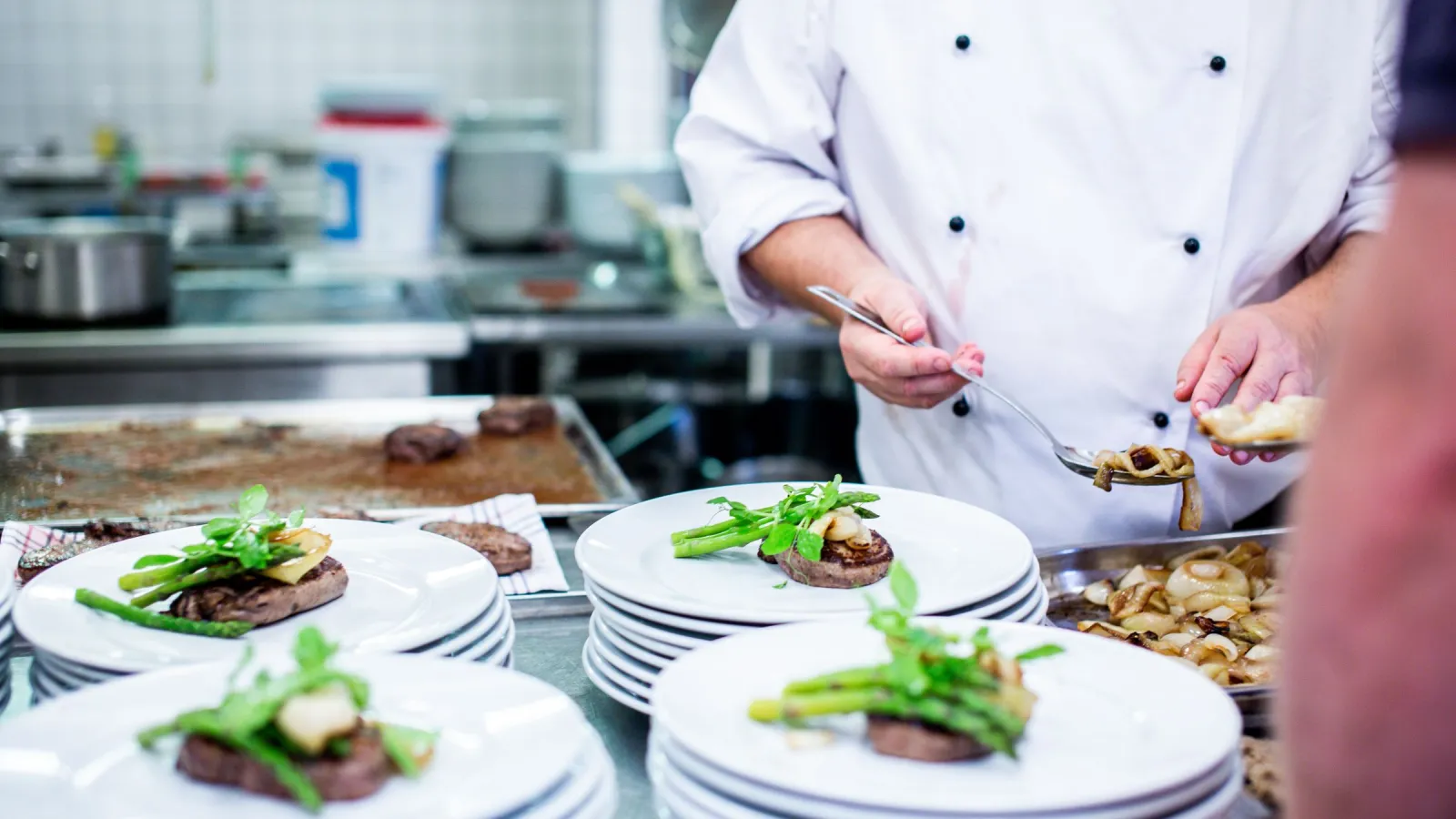
A guest who orders a burger to the room is not comparing you with a restaurant. They are comparing the wait with going out, and they are watching the clock. In most small hotels the food itself is fine. What goes wrong is the room service kitchen workflow around it: nobody sees the order for eight minutes, the tray leaves without cutlery, the burger waits at reception while the receptionist checks in a family.
This guide breaks the path from order to door into steps with a target time for each. The numbers are an example for a small hotel kitchen, not a rule. Adjust them to your menu and team.
The 30-minute timeline
| Step | Who | Example target | Running total |
|---|---|---|---|
| Order received and accepted | Reception or kitchen | 2 min | 2 min |
| ETA given to guest | Whoever accepts | at acceptance | 2 min |
| Preparation and cooking | Kitchen | 12-18 min | 20 min |
| Tray assembly and check | Kitchen or runner | 3 min | 23 min |
| Delivery to the room | Runner, porter, reception | 3-5 min | 28 min |
| Handover at the door | Runner | 1-2 min | 30 min |
Thirty minutes is a reasonable promise for hot dishes. Drinks, snacks and housekeeping items should be faster, often 10 to 15 minutes. Breakfast pre-ordered the evening before should arrive within the chosen time slot.
Step 1: Accept within two minutes
The clock starts when the guest presses "Order", not when the cook sees the ticket. An order that sits unread for ten minutes has already used a third of your time.
- Put the order screen where someone is always nearby: the kitchen pass during service hours, reception in the evening.
- Make new orders audible. A sound on the tablet plus a message to staff phones covers the moments when everyone is busy.
- One person per shift is responsible for accepting. Write the name on the rota.
- If nobody can take the order, reject it quickly with a reason rather than letting it wait.
A shared staff board where every order has a status (new, accepted, ready, delivered) lets kitchen and reception see the same picture without calling each other.
Step 2: Give an honest ETA
When you accept, tell the guest when the food will arrive. Be honest and add a small buffer.
- Normal evening: "about 25 minutes".
- Restaurant full or one cook on shift: "about 40 minutes". Guests accept a longer wait if they know it in advance.
- If an item is sold out, say so now and offer an alternative. Keep your stop list current so guests cannot order it in the first place, see our guide on managing sold-out dishes.
Arriving five minutes early feels like good service. Arriving five minutes late after promising 20 feels like a broken promise.
Step 3: A ticket the cook can read in three seconds
Whether it is a printed ticket or a screen, every order should show the same fields in the same order:
- Room number, large
- Time ordered and promised time
- Items and quantities
- Modifications ("no onion", "sauce on the side")
- Allergies, highlighted
- Notes for delivery ("baby sleeping, please don't knock")
If allergies or notes are buried in small text at the bottom, they will be missed on a busy evening.
Step 4: Mise en place for room service
Room service dishes compete with restaurant orders for the same stove. A few preparations keep them from waiting:
- Keep the room service menu short and built on components you already prep for the restaurant or breakfast.
- Choose dishes that hold quality for 10 minutes on a tray: soups, pasta, curries, club sandwiches, salads with dressing on the side.
- Have a ready shelf with pre-set trays, cloches or covers, and packaged condiments.
- Warm plates for hot dishes. A cold plate costs you several degrees by the time the food reaches the room.
Step 5: Tray assembly checklist
Most complaints about room service are not about taste. They are about what is missing. Tape a checklist next to the pass:
- Correct items, compared with the ticket
- Cutlery for each item, wrapped in a napkin
- Salt, pepper, any sauces ordered
- Cover or cloche on hot food, lid on soup
- Glass for each drink, bottle opener if needed
- Allergy-safe items clearly marked or on a separate plate
- Bill slip, if you use one, or a note that the amount goes to the room bill
The person who closes the tray ticks the list. It takes 20 seconds.
Step 6: Delivery route and who carries the tray
In a hotel with 20 to 80 rooms there is rarely a dedicated room service waiter. Decide in advance who delivers at each time of day:
- Lunch and dinner: a kitchen helper or restaurant waiter, if one is free.
- Evening: reception, if the desk can be left for five minutes, or a second staff member.
- Night: the night porter, with a shorter menu. Our guide to late-night room service covers what to offer after the kitchen closes.
Plan the route. Use the service lift if you have one, carry trays with two hands, and never leave the desk without a sign or a phone forward if guests may arrive. For orders that cannot be delivered within the promised time, call the room before the time runs out.
Step 7: Handover at the door
The last minute shapes how the guest remembers the order.
- Knock and say "Room service" clearly. Wait.
- Greet the guest by name if you know it.
- Ask where to put the tray. Do not walk in without being invited.
- Briefly name what is on the tray, so missing items are noticed now and not in ten minutes.
- Mention how and when the tray will be collected: "Just leave it outside the door, we'll pick it up."
- Mark the order as delivered right away.
If the guest asked not to be disturbed, follow the note: knock softly, or call the room first.
Step 8: Tray pickup and feedback
Trays left in corridors look bad and attract complaints from other guests.
- Check corridors on a schedule, for example 45 minutes after delivery and during evening rounds.
- Note what came back uneaten. Three half-eaten portions of the same dish in a week is information.
- Read every comment guests leave on orders.
- Once a week, look at average accept time and average delivery time. If either grows, find the step where the minutes are lost.
Common bottlenecks and quick fixes
| Bottleneck | Quick fix |
|---|---|
| Orders noticed late | Sound on tablet plus phone alerts, named person per shift |
| Kitchen overloaded at 20:00 | Shorter room service menu during peak, honest longer ETA |
| Trays leave incomplete | Checklist at the pass, pre-set trays |
| Nobody free to deliver | Agree who delivers per time slot before the shift starts |
| Food arrives lukewarm | Warm plates, covers, shorter route, deliver immediately |
Where software helps
The steps above work with paper tickets and a phone. Software makes them faster and visible. In Roomtray every order lands on the staff board and in Telegram at the same time, with the room number, items, notes and allergens. Staff accept with one tap and the amount goes to the room bill automatically.