How a Small Hotel Can Earn More From Room Service
Practical ways a small hotel can grow room service revenue: a short menu, smart timing, fair pricing, fast delivery and upsells guests actually want.
By the Roomtray team 6 min read
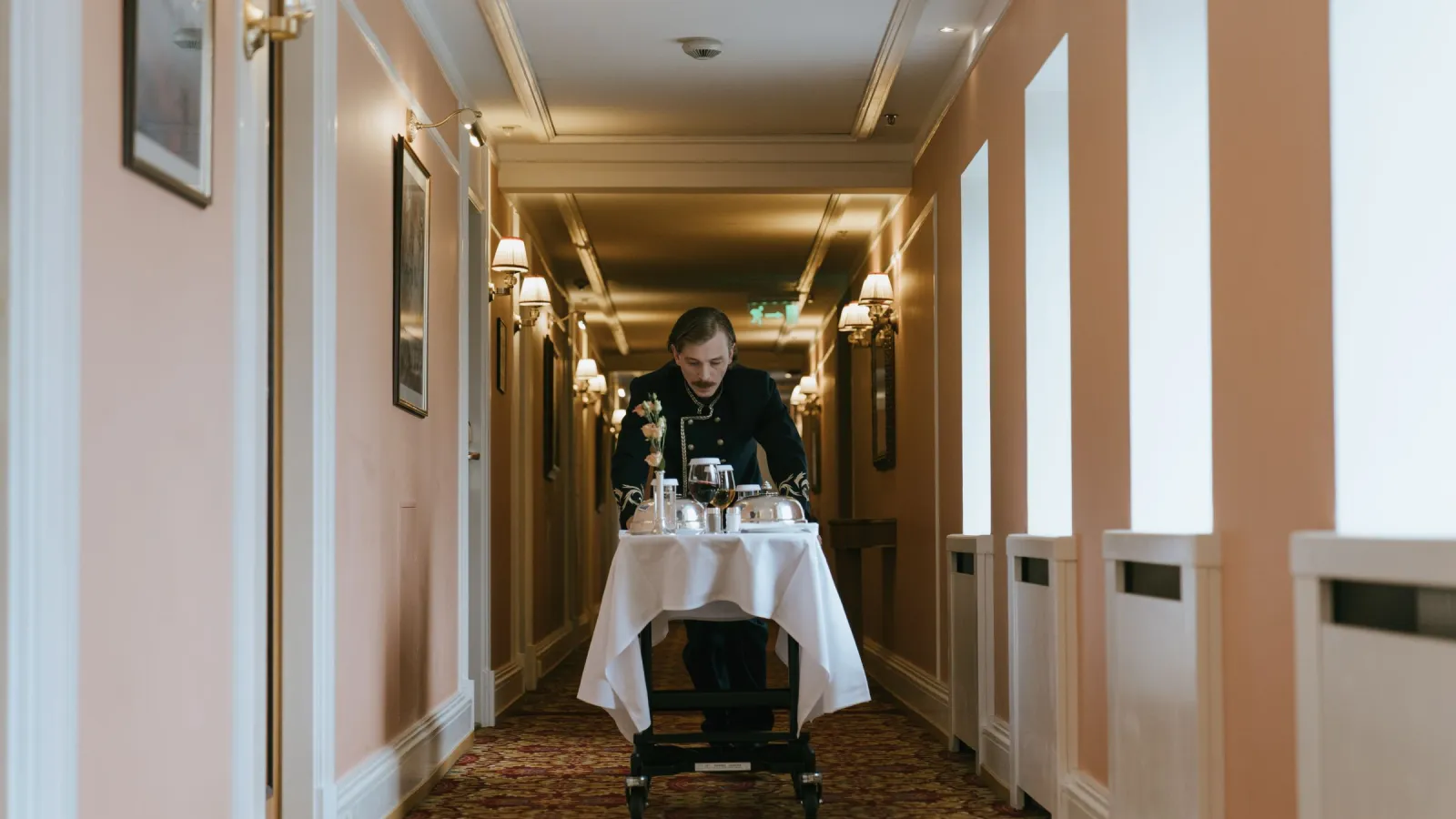
Room service revenue in a small hotel rarely fails because guests are not hungry. It fails because the menu is long and hard to read, the phone line is busy, nobody knows when the kitchen is open, and the tray arrives cold. Fix those four things and a 30-room hotel can turn room service from a cost centre into a steady extra line on the bill. This guide covers what to change, in the order that usually pays back fastest.
Start with a short menu built for rooms
A restaurant menu does not work in a room. Some dishes do not travel, some need a plate change, some take 35 minutes. A room service menu should be built from dishes that hold for 10 to 15 minutes on a tray and that your kitchen can make with one person on shift.
A practical structure for a small hotel:
- Breakfast: 4 to 6 items, including one set breakfast.
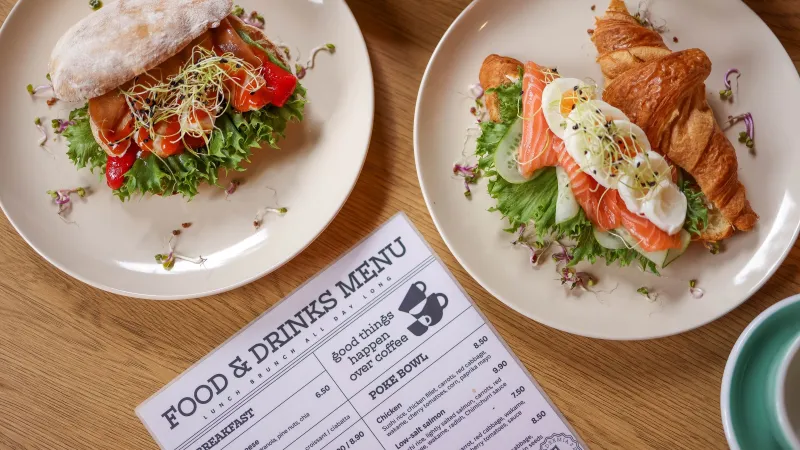
- All day: 6 to 10 items. A club sandwich, a soup, one pasta, one salad, one hot main, one vegetarian option.
- Snacks and late night: 4 to 6 items that need no cooking skill (cheese plate, nuts, toast, a toastie, cake).
- Drinks: water, soft drinks, beer, 2 to 3 wines by the bottle, coffee and tea.
Twenty to thirty items in total is plenty. A short menu is faster to cook, easier to keep in stock and easier for a guest to decide from. After the kitchen closes, keep the late-night section open: cold items can be served by reception.
Write lines that sell without lying
Each line needs a clear name, two or three ingredients, the portion and the price. For example:
Chicken club sandwich - toasted sourdough, grilled chicken, bacon, egg, tomato, fries on the side. 14 EUR
Compare that with "Club sandwich 14". The first one answers the questions a guest would otherwise call reception about.
Get the timing right
Guests order room service at predictable moments. In most city hotels these are:
| Time | Typical order | What to prepare |
|---|---|---|
| 07:00-10:00 | Breakfast, coffee | Preorders from the evening before, set breakfast |
| 12:00-14:00 | Light lunch for business guests | Sandwich, soup, salad |
| 18:00-21:00 | Dinner after arrival or a long day | Hot mains, wine |
| 21:00-23:30 | Snacks, drinks | Cold items, cheese, desserts |
Look at your own check-in times. If most guests arrive between 17:00 and 20:00 after a flight or a drive, that evening window is where the money is. A guest who arrives tired at 21:30 and sees a working menu in the room orders. A guest who reads "kitchen closed" goes to the nearest kebab shop.
Breakfast in the room is a separate opportunity. Taking orders the evening before lets the kitchen plan and lets you charge for a slot. See our guide to breakfast preorders for a full setup.
Price for the room, not for the street
Room service prices are usually higher than restaurant prices, and guests accept it if the logic is clear. You have three options:
- Higher item prices on the room service menu (for example +15 to 20% over the restaurant).
- A flat delivery fee per order, for example 3 or 5 EUR.
- A minimum order for delivery, for example 12 EUR.
Pick one or two and state them openly on the menu. Hidden surcharges that appear only on the bill at check-out cause disputes. A fee shown before the guest confirms the order does not.
Keep a few items cheap on purpose. A bottle of water, a coffee or a piece of cake at a fair price makes the first order easy. A guest who ordered once and got it fast will order dinner the next evening.
Make delivery fast and predictable
Speed matters more than presentation. A realistic target for a small hotel:
- Drinks and cold snacks: 10 to 15 minutes.
- Hot dishes: 25 to 35 minutes.
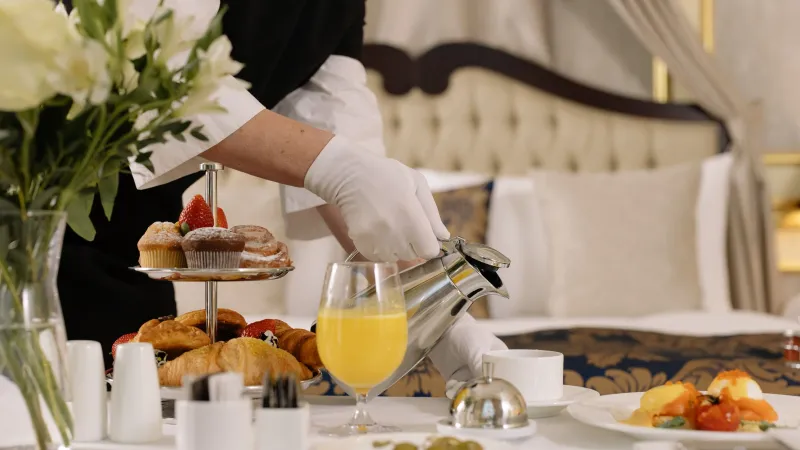
Tell the guest the expected time when they order, and tell them when it is on the way. Use a tray with a cover, a cloth napkin, cutlery wrapped together, salt, pepper and the bill or order slip. For hot food, a preheated plate and a cloche make the difference between "fine" and "cold".
Who delivers? In a 20-room hotel at night, it is often the receptionist. That works if the order arrives on a screen or a phone with the room number and the items, so nobody has to write anything down from a phone call.
Add upsells guests actually want
Upselling in room service should feel like a helpful suggestion, not a sales pitch. Good pairings are simple and logical:
- Burger or club sandwich: suggest a beer or a soft drink.
- Pasta or steak: suggest a glass or bottle of wine.
- Breakfast: suggest fresh orange juice or a second coffee.
- Late snack: suggest a dessert or herbal tea.
Two or three suggestions per dish are enough. More than that is noise. We cover pairings and wording in more detail in the article on room service upselling.
Other easy extras: a bottle of prosecco with a note for anniversaries, a children's plate, a "movie night" set with popcorn and soft drinks, a late check-out offered together with breakfast in the room.
Remove the friction of ordering
The biggest hidden loss is the guest who wanted to order and gave up. Common reasons:
- The menu is a laminated card that is missing or out of date.
- The guest does not speak the local language and does not want to phone.
- Reception does not answer because they are checking someone in.
- The guest is not sure if the kitchen is still open.
A digital menu opened from a QR code in the room solves most of this. The guest sees only the dishes available now, in their own language, with prices and allergens, and sends the order without a phone call. Staff receive it with the room number, so there are no misheard orders. If you keep a printed card as well, put the QR code on it.
Charge it to the room and check the bill
Letting guests add orders to the room bill removes another barrier: no cash, no card terminal at the door. It does require discipline. Every order needs to be recorded with time, room and amount, and the bill must be clear at check-out. A short end-of-day check of all open room charges prevents most disputes.
Track a few numbers
You do not need a BI tool. Once a month, look at:
- Number of room service orders per occupied room night.
- Average order value.
- The 5 best sellers and the 5 dishes nobody orders.
- Average delivery time.
Remove dishes that do not sell, move best sellers to the top of each section, and try one change at a time. For example, if 20 rooms are occupied and you get 3 orders a night at an average of 18 EUR, adding a wine suggestion that one guest in five accepts is visible on the bill within a month.
How Roomtray fits in
Roomtray gives each room a QR code that opens your menu in the guest's language, sends orders to a tablet and to Telegram with one-tap accept, and adds the amount to the room bill. Upsell suggestions, working hours per category and a stop list are built in. You can see the guest menu in the demo or read how charging orders to the room works. Hotels up to 15 rooms use it free.